Table of contents
Kitesurfing is an exciting and dynamic water sport that attracts thrill-seekers from around the world. Selecting the optimal kitesurfing equipment is a key step for beginners eager to learn safely and progress quickly. Dive into the following sections to discover expert guidance on making informed choices for a smooth and enjoyable start in kitesurfing.
Understanding kite types for beginners
For those exploring beginner kitesurfing gear, understanding the differences between inflatable and foil kites is vital when choosing your first kite. Inflatable kites, commonly referred to as LEI (Leading Edge Inflatable) kites, are the best kites for learning due to their user-friendly relaunch ability and robust construction. The air-filled leading edge helps them float on water, making them highly suitable for kitesurfing for beginners. Their advanced depower system allows the user to safely control power and improve handling in gusty winds, supporting a safer learning experience. On the other hand, foil kites, which use cells filled with air rather than inflatable bladders, are lightweight and often preferred for land or snow kiting. While foil kites can offer smoother performance in lighter winds, they generally present greater challenges during water relaunch and can be less forgiving in unpredictable conditions, making them less ideal as safe kitesurfing equipment for new students.
When selecting your first kite, prioritizing durability, depower efficiency, and ease of handling ensures a smoother progression. Reliable kites designed for beginners typically have enhanced safety features, stable flight characteristics, and simplified control systems. Before making a choice, consider testing different models and consulting with a certified instructor to match kite size and type to your weight, local wind conditions, and learning goals. Visiting a specialized retailer such as Professional Kite Shop can provide hands-on advice, access to suitable equipment, and expert guidance tailored to beginner needs.
Selecting the right board size
When seeking a kitesurfing board for beginners, choosing the correct size and shape plays a significant role in your learning experience. The ideal beginner board size largely depends on your body weight, with heavier riders typically requiring larger boards to ensure proper flotation and stability in the water. In general, a stable board for learning falls within the range of 135 to 150 centimeters in length and 40 to 46 centimeters in width, providing plenty of surface area for easy starts and balance. For lighter individuals, slightly smaller dimensions might offer better maneuverability, but it is always recommended to opt for a board that feels forgiving underfoot.
Skill level and local wind conditions also affect the decision. Novice riders benefit from a board with a moderate rocker—the gentle curve from tip to tail—since this design enhances control and makes the ride smoother in choppy waters. Boards labeled as easy control board typically have a wider outline and softer edges, both features that reduce the chances of catching the water unintentionally. These kitesurfing tips not only support faster progression but also build confidence during early sessions. In sum, the best kitesurfing board for beginners balances volume, width, and rocker to deliver stability, support, and user-friendly handling throughout the initial learning phase.
Harness and safety systems explained
When exploring the kitesurfing harness guide, understanding the differences between seat and waist harnesses is key for any beginner. Seat harnesses wrap around the rider’s hips and upper thighs, offering superior lower back support and stability for those new to the sport. This design helps to distribute the force evenly, making it a comfortable harness option that prevents the harness from riding up during crashes or strong gusts. Waist harnesses, on the other hand, sit above the hips and provide greater mobility but require more core strength and experience to handle properly. For those just starting, the beginner harness choice often leans toward seat harnesses due to their supportive structure and added security, making learning both safer and more enjoyable.
Choosing gear with advanced safety systems is a must for every novice. Harness safety features to prioritize include a reliable quick release system, which allows the rider to detach from the kite instantly in an emergency, minimizing the risk of injury. Look for harnesses that incorporate easy-to-reach quick release mechanisms and reinforced connection points, ensuring that safety systems function smoothly under stress. Many professional instructors stress the value of clear labeling and smooth operation of these features, as practicing their use can build confidence and readiness in real-world scenarios. Properly fitted gear with comprehensive safety systems supports a stress-free progression, letting newcomers focus on mastering the fundamentals of kitesurfing safely and effectively.
Importance of lines and bar setup
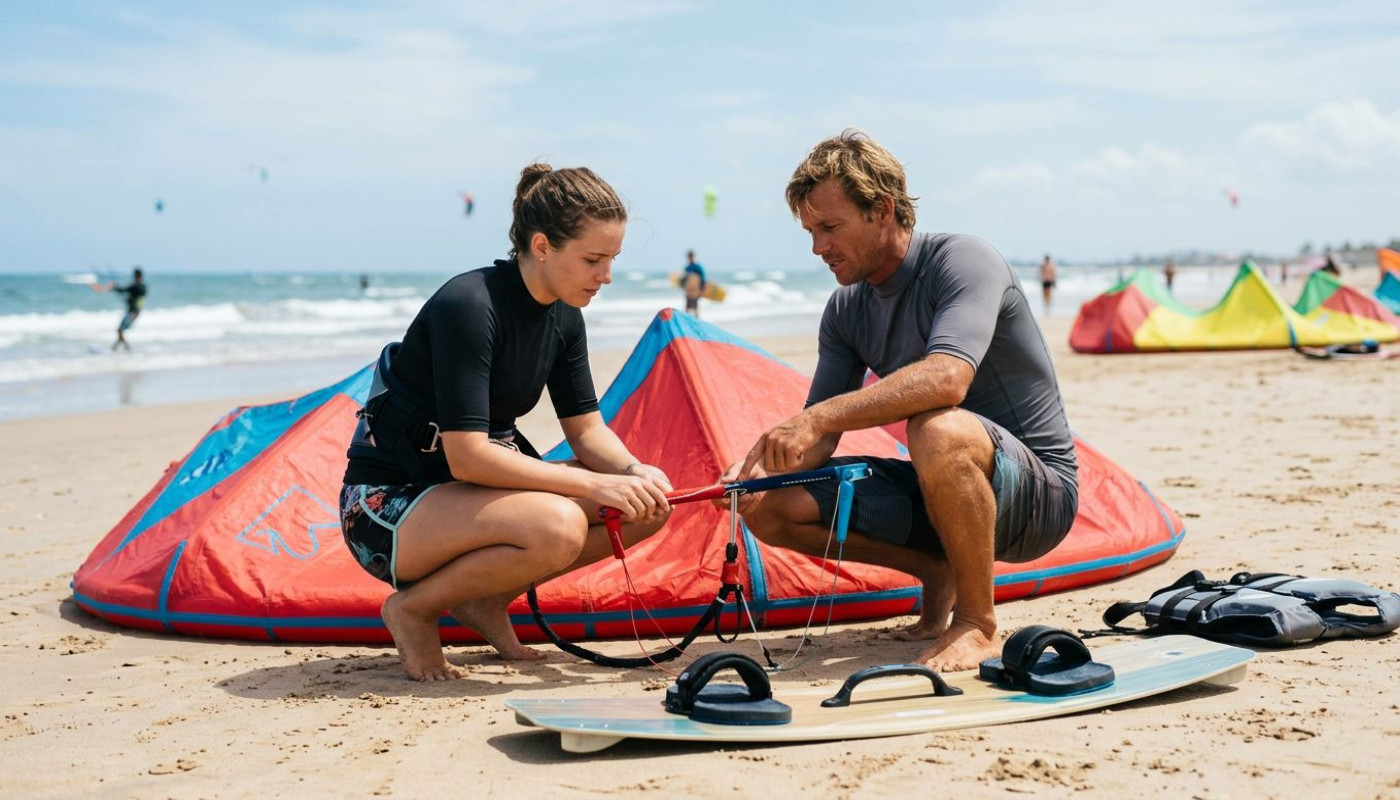
Selecting the right kite lines for beginners is key to both safety and progression. Shorter line lengths, typically between 20 to 23 meters, are often recommended during early sessions as they reduce the kite's power and turning speed, making it easier to manage for those new to the sport. A beginner control bar should offer clear color coding and easily accessible safety systems; these features contribute significantly to safe kite handling by ensuring rapid depowering if needed. Choosing a kitesurfing bar setup with an adjustable bar throw allows the rider to fine-tune power delivery and response, directly impacting comfort and control. Additionally, lines should be made from durable, low-stretch materials to guarantee reliability during repeated launches and crashes that are common while learning.
For line length advice, novices may benefit from starting with 22-meter lines, as this provides a balanced compromise between response and manageable power. When considering a kitesurfing bar setup, ensure it is compatible with the chosen kite model and includes a well-designed quick-release system. This setup greatly enhances safe kite handling by allowing the rider to instantly detach in emergency situations. Paying careful attention to these specifications not only helps prevent accidents but also accelerates skill acquisition, as reliable equipment builds confidence and reduces the learning curve.
Wetsuits and protective gear
Wetsuits play a significant role in kitesurfing by providing thermal insulation and shielding the skin from abrasions, chafing, and sun exposure. According to any comprehensive kitesurfing wetsuit guide, selecting the right wetsuit involves considering water temperature, wind conditions, and session length. For colder climates, a thicker wetsuit (4/3mm or 5/4mm) offers better thermal insulation, while warmer waters allow for thinner options (2/2mm or 3/2mm). Fit is also vital; a wetsuit should be snug but not restrictive, as this maximizes protection and mobility, key beginner wetsuit tips for those new to the sport.
In addition to wetsuits, protective gear for beginners such as kitesurfing helmets and impact vests is highly recommended. A kitesurfing helmet guards against head injuries from boards, equipment, or accidental collisions, while an impact vest provides buoyancy and absorbs shocks during falls or rough landings. When choosing these items, ensure both comfort and certification for water sports use. For impact vest advice, look for designs that allow free range of movement around the arms and chest. Prioritizing the right wetsuit and protective gear builds a safer and more confident foundation for those starting their kitesurfing journey.
Similar articles

Unraveling the Science Behind Advanced Tennis Racquet Technology

Exploring The Impact Of Age Categories On Competitive Events
